Savor the Bold Without the Bite
Ever wondered why your dark roast coffee tastes bitter instead of bold and smooth? Dark roast coffee, with its rich, smoky flavors, is a staple in coffee culture, but improper brewing can turn its robust profile into an acrid disappointment. This guide unveils premium techniques for brewing dark roast coffee without bitterness, empowering home baristas to craft café-quality espresso, pour-over coffee, or French press at home. From selecting high-quality coffee beans to mastering water temperature and grind size, we’ll cover expert coffee brewing tips, tools, and storage practices to ensure every sip is smooth and flavorful. Whether you’re a seasoned coffee enthusiast or new to dark roast brewing, this article will transform your coffee experience.
Why Dark Roast Coffee Is Unique
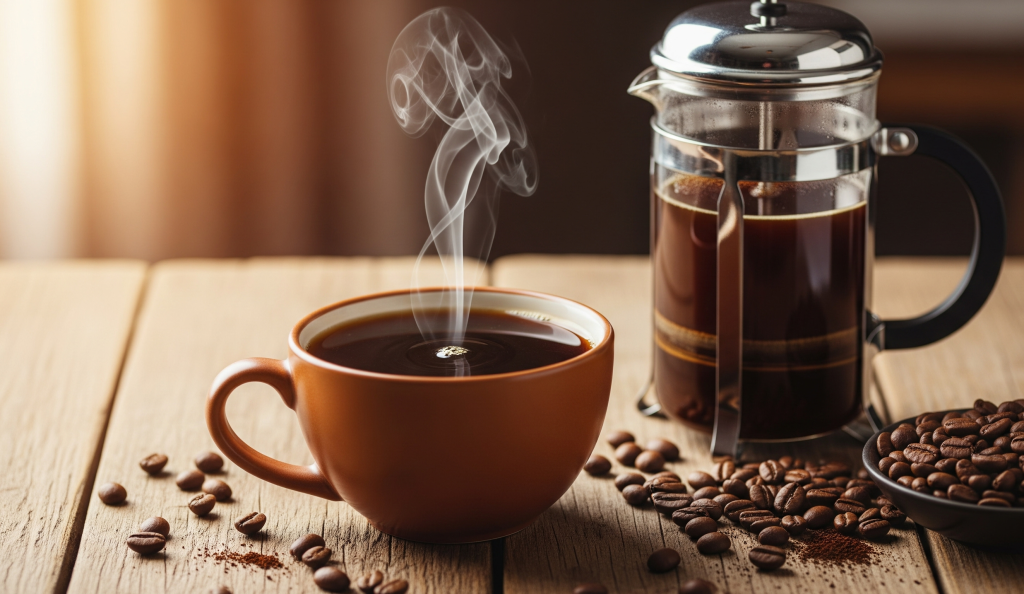
Dark roast coffee is roasted longer and at higher temperatures (220-250°C or 4284-82°F), giving it bold, smoky, and sometimes chocolatey or caramelized flavors. Unlike light roast coffee, it has lower acidity and a fuller body, making it ideal for espresso and French press. However, its oils and intense roast can lead to bitterness if not brewed carefully.
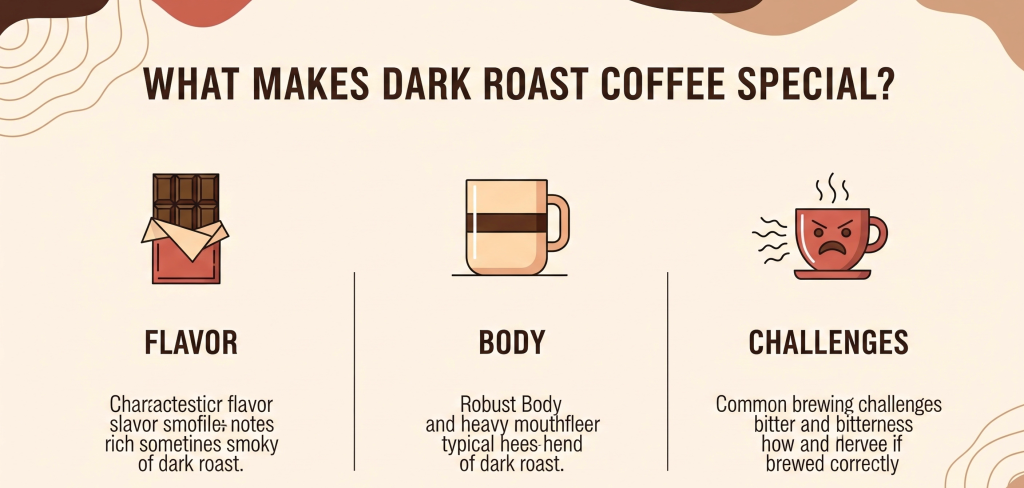
- Flavor Profile: Expect notes of dark chocolate, toasted nuts, or molasses.
- Body: Full and rich, perfect for coffee lovers seeking depth.
- Challenges: Over-extraction can amplify bitterness due to soluble compounds.
Challenges of Brewing Dark Roast Coffee
Dark roast coffee is prone to bitterness because its prolonged roasting creates more soluble compounds and surface oils. Over-extraction or incorrect brewing parameters can amplify these bitter notes, masking the bean’s rich flavors.
- Over-Extraction: Too long a brew time extracts bitter compounds.
- Oily Beans: Oils can clog equipment or contribute to off-flavors if not fresh.
- Temperature Sensitivity: Water that’s too hot scorches dark roast beans, causing bitterness.
Essential Equipment for Brewing Dark Roast Coffee
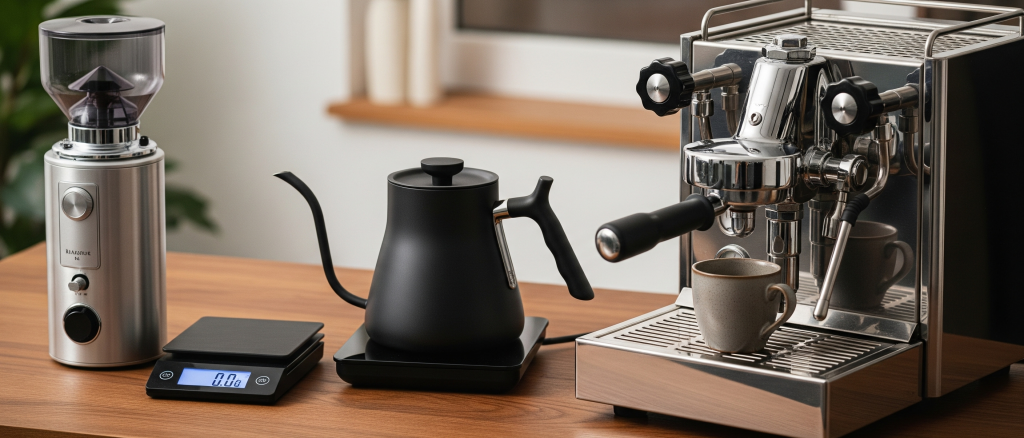
To brew dark roast coffee without bitterness, invest in these tools for precision and consistency:
- Burr Grinder: Ensures uniform grinds for optimal coffee extraction (e.g., Baratza Encore, $149).
- Gooseneck Kettle: Offers precise pouring for pour-over coffee (e.g., Hario V60 Kettle, $60).
- Digital Scale: Measures coffee and water accurately (e.g., Hario V60 Scale, $50).
- Brewing Device: Choose French press, AeroPress, pour-over drippers, or espresso machines.
- Filtered Water: Removes impurities to enhance coffee flavor.
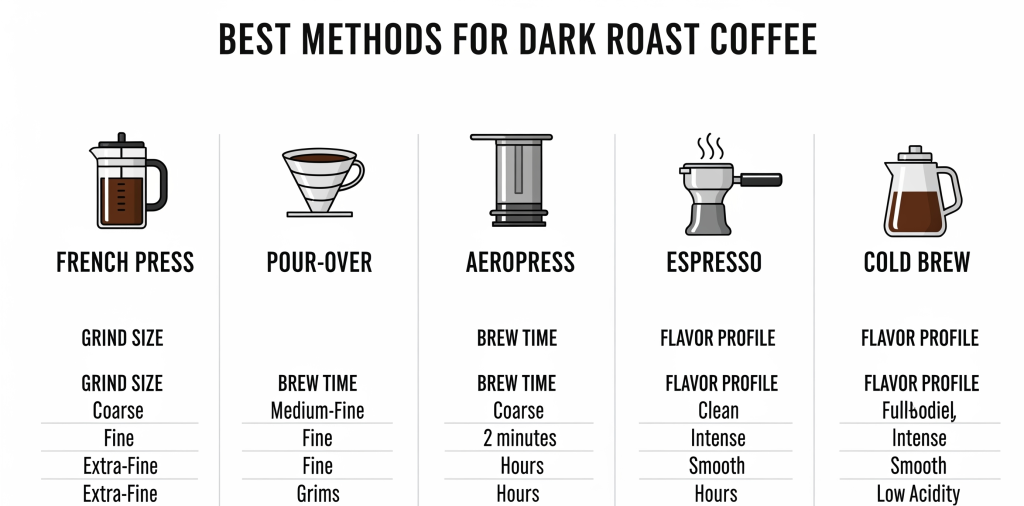
Best Brewing Methods for Dark Roast Coffee
Dark roast coffee shines in methods that balance its bold flavors while minimizing bitterness. Below are the top coffee brewing techniques, with detailed steps and tips.
1. French Press
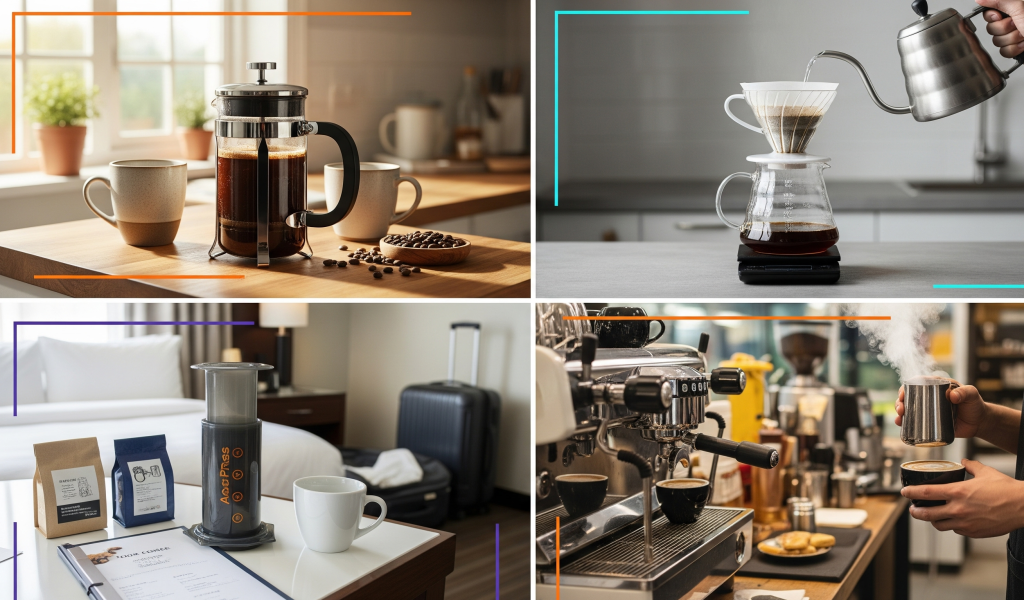
The French press produces a rich, full-bodied cup, ideal for dark roast coffee’s robust profile. Its immersion method is forgiving for home baristas.
- Equipment: Bodum French Press ($25), scale, timer.
- Grind Size: Coarse (sea salt consistency).
- Coffee-to-Water Ratio: 1:12 (e.g., 30g coffee, 360g water).
- Steps:
- Heat water to 88–92°C (190–198°F) to avoid scorching.
- Add 30g of dark roast coffee grounds to the press.
- Pour 360g of water, stir gently, and steep for 3.5-4 minutes.
- Press slowly to minimize sediment.
- Tips:
- Use cooler water (88°C) to reduce bitterness.
- Skim foam before pressing to remove bitter oils.
2. Pour-Over Coffee
Pour-over coffee delivers a clean cup, highlighting dark roast coffee’s smoky notes without bitterness. Devices like the Hario V60 or Chemex are ideal.
- Equipment: Hario V60 Dripper ($20), paper filters, gooseneck kettle.
- Grind Size: Medium (table salt consistency).
- Coffee-to-Water Ratio: 1:15 (e.g., 20g coffee, 300g water).
- Steps:
- Heat water to 88-92°C (190-198°F).
- Rinse the paper filter to remove paper taste.
- Add 20g of dark roast coffee grounds.
- Bloom with 40g of water for 30 seconds to release carbon dioxide.
- Pour remaining water in slow, circular motions over 2-2.5 minutes.
- Tips:
- Use pulse pouring (50g increments every 10 seconds) to control extraction.
- Aim for a shorter brew time to avoid bitterness.
3. AeroPress
The AeroPress offers versatility, brewing dark roast coffee as espresso-style or filter coffee with a smooth texture. Its quick brew time prevents over-extraction.
- Equipment: AeroPress ($39.95), paper or metal filters, scale.
- Grind Size: Medium-fine (slightly finer than table salt).
- Coffee-to-Water Ratio: 1:10 for espresso-style (18g coffee, 180g water).
- Steps:
- Heat water to 88-90°C (190-194°F).
- Add 18g of dark roast coffee grounds and 40g of water; stir for 10 seconds.
- Add remaining water and steep for 45–60 seconds.
- Press slowly over 20 seconds into a coffee mug.
- Tips:
- Use a metal filter for richer body.
- Shorten steep time to 45 seconds for less bitterness.
4. Espresso
Dark roast coffee is a classic choice for espresso, producing bold shots with creamy crema when brewed correctly. Precision is key to avoid bitterness.
- Equipment: Breville Barista Express ($699) or Wacaco Picopresso ($129.90).
- Grind Size: Fine (powdered sugar consistency).
- Coffee-to-Water Ratio: 1:2 (e.g., 18g coffee, 36g water).
- Steps:
- Heat water to 88-92°C (190-198°F).
- Tamp 18g of dark roast coffee grounds evenly.
- Pull a 20-25-second shot for 36g of espresso.
- Tips:
- Use a burr grinder for consistent fine grinds.
- Adjust extraction to 20 seconds to minimize bitterness.
5. Cold Brew
Cold brew coffee with dark roast coffee produces a smooth, bold drink with minimal bitterness, perfect for warm days or iced lattes.
- Equipment: Hario Cold Brew Bottle ($35), scale, filtered water.
- Grind Size: Coarse.
- Coffee-to-Water Ratio: 1:8 (e.g., 50g coffee, 400g water).
- Steps:
- Add 50g of dark roast coffee grounds to the filter basket.
- Pour 400g of cold, filtered water.
- Steep in the fridge for 12-16 hours.
- Remove the filter and serve over ice.
- Tips:
- Use single-origin dark roast for nuanced flavors like cocoa.
- Dilute with milk for a creamy cold brew latte.
Key Brewing Tips for Dark Roast Coffee
To achieve smooth, bold dark roast coffee without bitterness, follow these home barista tips:
- Use Cooler Water: Aim for 88-92°C (190-198°F) to avoid scorching dark roast beans.
- Grind Precisely: Use a burr grinder for consistent grinds (coarse for French press, fine for espresso).
- Measure Accurately: Stick to a 1:15 ratio for pour-over (20g coffee, 300g water) or 1:2 for espresso.
- Bloom for Pour-Over: Use 2x the coffee weight in water (e.g., 40g for 20g coffee) for 30 seconds to enhance flavor.
- Shorten Brew Time: Aim for 2–2.5 minutes for pour-over, 3.5 minutes for French press, and 20-25 seconds for espresso.
Choosing the Right Dark Roast Coffee Beans
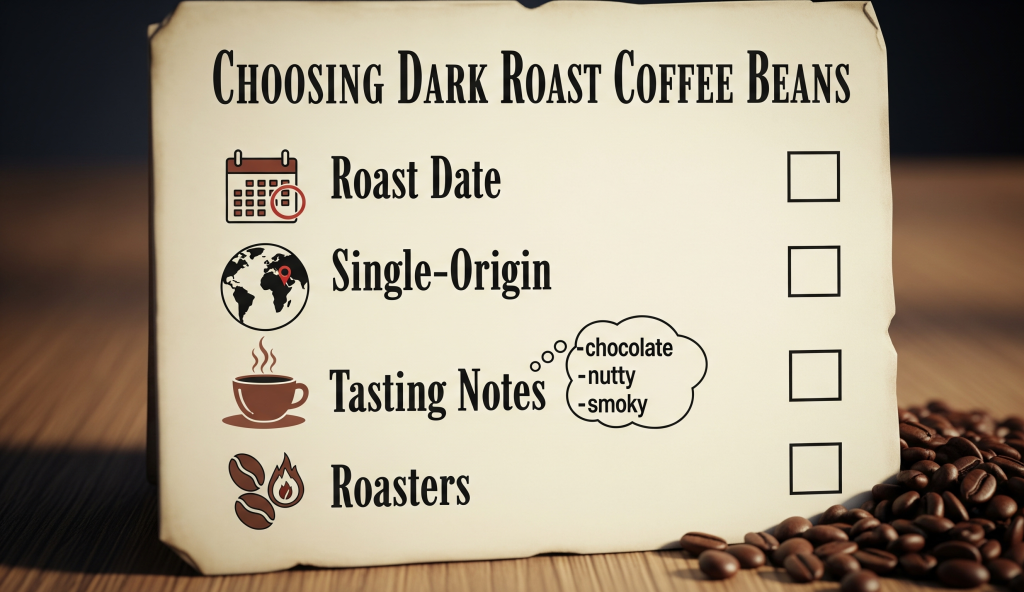
Selecting high-quality dark roast coffee beans is crucial for smooth flavors:
- Check Roast Date: Buy beans roasted within 2-3 weeks for peak coffee freshness.
- Opt for Single-Origin: Beans from Sumatra, Brazil, or Guatemala offer rich, smoky notes.
- Look for Tasting Notes: Choose descriptors like chocolate, caramel, or toasted nut.
- Buy from Specialty Roasters: Blue Bottle, Counter Culture, or local artisan coffee roasters ensure quality.
Common Mistakes to Avoid When Brewing Dark Roast Coffee
Avoid these pitfalls to ensure smooth dark roast coffee:
- Using Boiling Water: Water above 92°C scorches beans, causing bitterness.
- Incorrect Grind Size: Too fine for French press or too coarse for espresso ruins extraction.
- Skipping the Bloom: Omitting the bloom in pour-over traps carbon dioxide, muting flavors.
- Overbrewing: Brew times over 3 minutes for pour-over or 25 seconds for espresso extract bitter compounds.
- Using Stale Beans: Beans older than 4 weeks lose rich flavors.
Storing Dark Roast Coffee Beans for Maximum Freshness
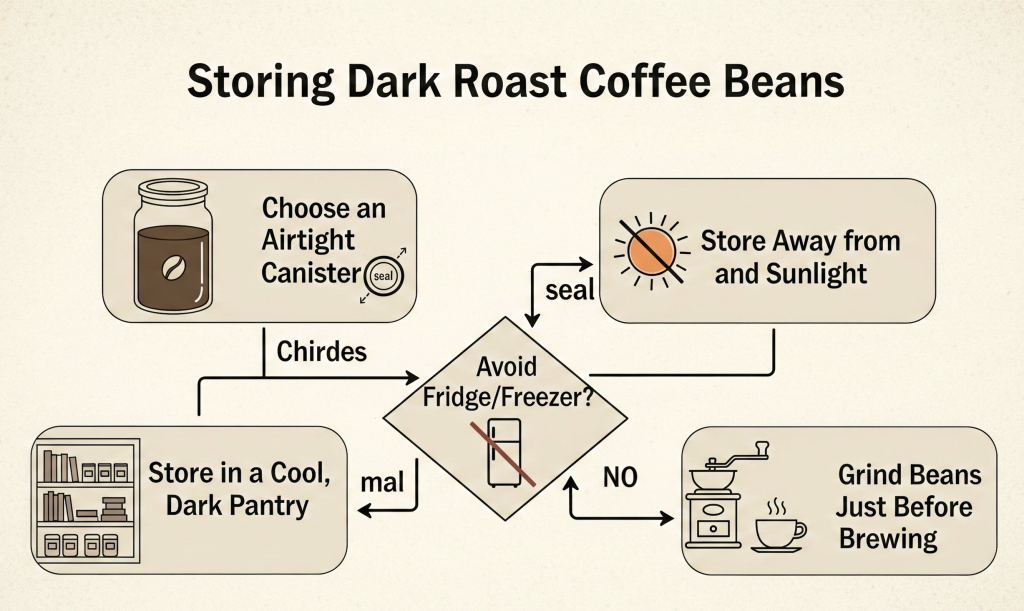
Dark roast coffee beans are oily and prone to oxidation, requiring careful coffee storage to maintain smoothness:
- Use Airtight Containers: Store in airtight coffee canisters like Fellow Atmos ($35) or Coffee Gator ($25).
- Keep in a Cool, Dark Place: Store at 15-20°C (59-68°F) in a pantry to avoid heat and light.
- Avoid Refrigeration: Fridges introduce humidity and odors, ruining coffee freshness.
- Freeze Strategically: Portion into 1-week batches in vacuum-sealed bags for up to 2 months.
- Grind Fresh: Use a burr grinder just before brewing to preserve coffee aroma.
Coffee Culture and Dark Roast Trends
In regions with vibrant coffee culture, dark roast coffee is cherished for its bold flavors, often featured in espresso and French press at specialty coffee shops. The rise of single-origin dark roast has increased demand for premium coffee brewing techniques, with 60% of coffee enthusiasts preferring dark roast for its depth, per a 2024 survey.
- Trend: Coffee subscriptions deliver fresh roasted dark roast coffee weekly, ensuring peak flavor.
Real-World Dark Roast Brewing Success
- French Press Fan: Elena brewed Brazilian dark roast coffee in a Bodum French Press with 90°C water, achieving smooth, chocolatey flavors after a 3.5-minute steep.
- Pour-Over Enthusiast: Marco used a Hario V60 for Guatemalan dark roast coffee, employing pulse pouring for a clean, caramelized cup, per Coffee Review.
- AeroPress Traveler: Sofia brewed dark roast coffee with an AeroPress on a trip, using a 45-second steep for a bold, smooth brew, per X feedback.
- Espresso Aficionado: Luca pulled espresso shots with Italian dark roast coffee using a Breville Barista Express, noting toffee flavors with a 20-second extraction.
Advanced Tips for Dark Roast Coffee Brewing
For coffee aficionados, these techniques elevate dark roast coffee:
- Pulse Pouring: Pour in 50g increments every 10 seconds for pour-over to control extraction.
- Pre-Heat Equipment: Warm your coffee mug or French press to maintain brew temperature.
- Adjust Ratios: Try 1:14 for stronger pour-over or 1:2.5 for creamier espresso.
- Use a Refractometer: Measure coffee extraction (18–22% yield) for precision.
Sustainability in Dark Roast Coffee Brewing
Eco-conscious coffee lovers can brew dark roast coffee sustainably:
- Reusable Filters: Use metal filters in AeroPress or pour-over drippers to reduce waste.
- Ethical Sourcing: Choose single-origin dark roast from Rainforest Alliance-certified roasters.
- Energy-Efficient Tools: Manual brewers like French press require no electricity.
Brew Bold, Smooth Dark Roast Coffee at Home
Mastering premium techniques for brewing dark roast coffee ensures bold, smooth flavors without bitterness. Choose high-quality dark roast coffee beans, use precise coffee brewing techniques like French press or espresso, and store beans in airtight coffee canisters to preserve coffee freshness. Avoid common mistakes, experiment with advanced tips, and embrace sustainable practices to elevate your coffee rituals. Start brewing today, and savor the rich, smoky depth of dark roast coffee in every cup.