Why Filtered Water for Coffee is Non-Negotiable ☕
Imagine starting your day with a cup of coffee that tastes flat or bitter. You blame the beans or the grind, but the real culprit is often the water. Water makes up 98 percent of your brew, so poor quality can ruin flavor and, more severely, damage your machine over time. This definitive guide walks you through how to select best water filter for your coffee machine, covering everything from water basics to top picks and maintenance. By the end, you will know how to pick the right water filtration system, install it, and keep your coffee tasting consistently amazing while protecting your valuable gear.
We will explore water science, filter types, key factors, expert recommendations, detailed installation tips, and critical pitfalls to dodge. This matters because the right water filter actively boosts taste, drastically cuts scale buildup, and saves hundreds in future repair costs. Whether you operate a simple drip brewer or a high-end espresso setup, clean, balanced water changes absolutely everything.
Understanding Water Quality for Coffee Brewing
Good coffee starts with good water. Tap water quality varies drastically by location, carrying minerals, chlorine, and microscopic impurities that alter the delicate process of flavor extraction. Understanding these components is the first step in selecting a water filter for your coffee machine.
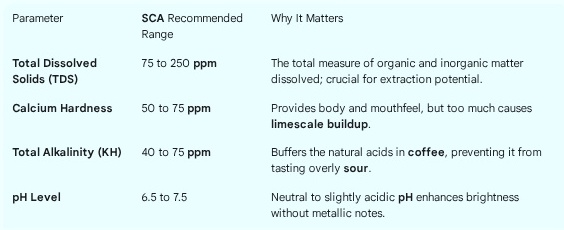
The SCA Standards: The Goldilocks Zone for Coffee Water
The Specialty Coffee Association (SCA) sets detailed standards for ideal coffee water a specific balance often referred to as the “Goldilocks Zone:
The Twin Threats: Hardness and Chlorine
- Hardness and Scale Reduction: Hardness comes primarily from calcium and magnesium ions. Magnesium, specifically, is prized by baristas for enhancing the fruity notes in coffee. However, calcium is the main culprit for limescale. Too much hardness causes limescale buildup, clogging pipes and heating elements in your coffee machine. This limescale can reduce a machine’s thermal efficiency by 20-30% and dramatically increase the risk of an expensive boiler failure. Too little hardness strips flavor, leaving coffee dull (flat coffee), and in the case of pure **Reverse Osmosis (RO) water, can cause corrosive action on internal metal components.
- The Taste Killers: Chlorine and chloramines are added to municipal water for sanitation but are flavor assassins. They impart a medicinal or swimming-pool-like smell that masks the delicate aromatics of specialty coffee beans. A simple carbon filter is required for chlorine removal. Furthermore, Chloride levels should be kept under 30 ppm to prevent metallic or savory notes, while Sodium below 30 ppm avoids an unpleasant saltiness.
- Crucial First Step: You must test your tap water with a specialized water hardness test kit (strips) and a digital TDS meter before choosing any filter. The results directly guide your decision: high TDS (over 300 ppm) screams for RO; moderate hardness (80-150 ppm) is ideal for an ion exchange filter.
Types of Water Filters for Coffee Machines
Not all filters work the same. Each type of coffee water filter targets specific issues. Your selection should be based on your machine type, available space, and your water‘s test results.
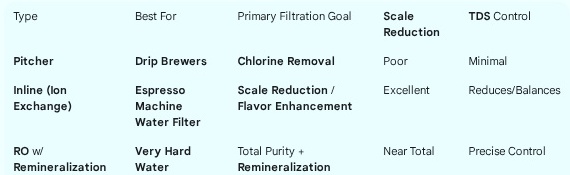
1. Pitcher Filters (Activated Carbon Basic)
These common fridge filters (like Brita or PUR) primarily use activated carbon to reduce chlorine, bad odors, and some heavy metals.
- Best For: Drip brewers, pour-overs, and casual users where space and cost are the main constraints.
- Pros: Low upfront cost, no installation required, effective chlorine removal.
- Cons: Do not effectively perform scale reduction; they are poor at reducing calcium and magnesium hardness, meaning limescale remains a major threat in hard water areas. Cartridges require replacement every 40 gallons or two months.
2. Inline Filters and In-Tank Cartridges (Ion Exchange)
These are the most popular professional and prosumer solution for espresso machines. They plumb directly into your water line or clip inside the machine’s reservoir.
- Function: They use ion exchange resin to swap scale-forming calcium ions for non-scaling ions (like sodium or, ideally, magnesium). This is superior for scale reduction than a standard carbon filter.
- Examples: BWT Bestmax Premium (professional standard, adds flavor-enhancing magnesium), ClaroSwiss water filter (proprietary in-tank filters).
- Pros: Excellent scale reduction protecting boilers, superior flavor enhancement (especially magnesium-based ones), long lifespan (up to six months or more).
- Cons: Installation needs basic plumbing skills (for inline versions). Proprietary in-tank filters often have a small capacity.
3. Reverse Osmosis (RO) Systems with Remineralization
RO systems are the ultimate solution for problem water (extremely hard water, high TDS, well water).
- Function: RO pushes water through a fine membrane, removing up to 99% of everything—sediments, chlorine, chemicals, and all TDS. Pure RO water is corrosive, so a crucial final stage, known as remineralization, is used. This filter adds a balanced mix of magnesium and calcium back into the water to hit the SCA 75-150 ppm target.
- Examples: Countertop units (like AquaTru) or Under-Sink Filtration Systems (iSpring RCC7).
- Best For: Dealing with the most challenging hard water or achieving absolute water quality control.
- Cons: Higher initial cost, requires maintenance, and the process wastes some water (though modern units are efficient).
Key Factors to Consider When Choosing a Water Filter
Selecting the best water filter for coffee machine involves a calculated assessment of technical specifications and practical needs.
A. Compatibility and Integration
Check your manual for specific filter requirements.
- In-Tank Systems: Machines like Nespresso or Jura require proprietary internal cartridges (ClaroSwiss water filter alternatives exist but must fit perfectly). These are the easiest to manage.
- External Inline Systems: Ideal for prosumer machines with reservoirs or those plumbed directly. Mismatched filters can affect flow rate, which is critical for consistent shot pressure in espresso machines. Measure ports and check flow rates (aim for >0.5 gallons per minute).
- A Note on External Salt-Based Softeners: Traditional whole-house water softeners use a salt-based process to swap calcium for sodium. While they eliminate scale buildup, they can dramatically increase the sodium level in your coffee water, leading to a noticeable salty, metallic taste that ruins the brew. Use dedicated ion exchange or RO for coffee.
B. Filtration Efficiency and Contaminant Removal
Look beyond basic chlorine removal.
- Certification is Key: Prioritize systems with NSF or WQA certifications that verify the manufacturer’s claims for 95% chlorine removal, lead reduction, and microbial reduction (if needed).
- Prioritize Scale and Flavor: For coffee, the priority is calcium softening while preserving or adding magnesium. Magnesium bonds effectively with flavor compounds, leading to brighter, richer extraction and contributing to the stability of crema in espresso.
C. Maintenance, Replacement Costs, and Eco-Friendliness
A filter’s true cost is its annual replacement expense.
- Cartridge Lifespan: Carbon filters clog faster in “dirty” water, needing monthly checks. Inline ion exchange filters last longer (6-12 months), and RO membranes last 1-2 years. Budget $0.10 to $0.20 per gallon long term.
- The ROI: While an RO system costs $300-$500 upfront, the return on investment (ROI) via superior coffee quality and virtually eliminating expensive descaling chemicals and machine repairs is often quick. Manufacturers report machines using filtered water last at least twice as long.
- Sustainability: Seek out filters with recyclable components and systems that minimize water waste.
Top Recommendations for Best Water Filters
Based on contemporary reviews, lab testing for SCA compliance, and real-world scale reduction performance, these water filtration systems are consistently rated the highest by coffee professionals and serious home baristas.
- BWT Bestprotect Inline Filter
- System Type: Advanced Ion Exchange Filter (Magnesium-Enhanced)
- Why It Works: Specifically designed to achieve the SCA standards for espresso machine water filter needs. It is excellent for scale-prone areas because it not only removes calcium but adds magnesium for superior flavor.
- Rating: 4.7/5. Perfect for plumbed or reservoir-fed espresso machines.
- AquaTru Countertop RO System
- System Type: Reverse Osmosis System with Remineralization
- Why It Works: Top-tested for purity, removing PFAS, lead, and all heavy metals. Its integrated remineralization stage ensures the water is balanced for coffee brewing water (hitting the 75-150 ppm TDS sweet spot).
- Rating: 4.9/5 from lab tests. Ideal for the purist who demands complete control, especially when dealing with hard water.
- Everpure 4CB5-S Cartridge
- System Type: Commercial-Grade Activated Carbon Block
- Why It Works: A classic commercial filter that provides high-volume, reliable chlorine removal and sediment filtration. It offers moderate scale reduction capabilities.
- Rating: 4.6/5. A durable, high-flow option suitable for high-use homes with moderately soft to neutral water.
- Piurify Alchemy Countertop Filter
- System Type: Ultrafiltration (Non-RO)
- Why It Works: Scores high for 99 percent contaminant removal without the water waste of RO. It preserves existing minerals, making it a great choice if your existing TDS is already close to the ideal SCA range.
- Rating: 4.8/5. Compact and installation-free, a great espresso water filter option for beginners.
Detailed Water Testing Before You Buy
Skipping the water hardness test kit is the number one mistake.
- Measure TDS: Use a $10 TDS meter. A reading over 300 ppm is a clear indicator that a system with high scale reduction (like RO or BWT Bestprotect) is necessary.
- Measure Hardness and Alkalinity: Use test strips or drops for a clearer picture.
- If Total Hardness is low (under 50 ppm) but Alkalinity is also low, you need a remineralization filter or Third Wave Water additives to prevent flat coffee and corrosion.
- If Total Hardness is high, and Alkalinity is very high (over 100 ppm), you have an extreme limescale buildup threat that only RO can effectively mitigate.
- Track Changes: Use your TDS meter to check the water after it passes through the filter. This ensures the water quality is hitting the SCA target of 75-150 ppm and not dipping into the corrosive zero TDS range.
Installation Guide for Different Filter Types
Proper installation and priming are crucial to prevent air pockets and carbon dust from entering your machine.
For Inline Filters and External Cartridges
- Turn Off Water: Always power down the machine and close the water supply line.
- Flush the Filter: Before connecting it to your machine, you must flush the new cartridge by running 5-10 gallons of water through it into a sink. This clears manufacturing residue and prevents air bubbles from causing inconsistent pressure in your espresso machine. This step is often overlooked.
- Installation: Cut the water line (if direct plumbing) and secure the filter head. For reservoir-based inline filters, simply drop the filter and hose end into the tank.
- Leak Check: Slowly turn the water supply back on and check all connections. Allow the machine to cycle a full tank of water through before making your first brew.
For Countertop and Under-Sink RO Systems
While countertop RO systems are plug-and-play, under-sink filtration systems often require connection to the cold-water line, a dedicated faucet, and a drain line for the waste water. Professional help is often advised for a complex, dedicated coffee station.
Pro Tip: Filter “Sweating”: After a new inline filter is installed, especially in warm environments, condensation (or “sweating”) on the filter can attract bacteria. A regular visual check and ensuring good airflow under the sink is a simple maintenance step.
To find the perfect espresso machine or drip brewer that pairs well with these high-end water filtration systems, you can explore a curated selection of equipment at our recommended partner: [https://cafeova.com].
Maintaining Your Coffee Water Filter for Longevity
Neglect is costly. A filter is only effective up to its rated capacity.
- Rinse Carbon Filters: If flow slows, try rinsing the carbon filter unit monthly to dislodge built-up sediment.
- Follow the Schedule: Never rely solely on taste. The filter can still remove chlorine but be completely exhausted of its scale reduction (ion exchange) resin. Stick to the manufacturer’s gallons/months replacement indicator, or, better yet, rely on a post-filter TDS reading check.
- Store Properly: Unused replacement cartridges should be stored dry, in a cool place, and away from direct sunlight to prevent premature deterioration or mold growth.
- Signs of Failure: Slow flow, a return of the “tap water taste” (chlorine), or, most critically, an unexpected spike in the post-filter TDS reading or a positive result on your water hardness test kit. Address these immediately to protect your coffee machine from imminent limescale buildup.
Brew Better with the Right Filter
Choosing the best water filter for your coffee machine is not a luxury; it is an essential step that transforms your routine into a ritual and protects a significant investment. Start with accurate water testing, match the results to the appropriate filtration system (ion exchange filter for scale reduction or RO system for total water quality control), and maintain it diligently.
By controlling your water, you control the extraction, eliminate off-flavors, ensure consistent crema, and avoid the financial pain of limescale buildup. Your taste buds and your wallet will
Disclaimer:
This article is for informational and educational purposes only and is not a substitute for professional advice. Water chemistry is complex and varies widely by location. Before installing any plumbed-in water filtration system, especially Reverse Osmosis systems, it is highly recommended to consult with a certified plumbing or water treatment professional. Always follow the specific maintenance and warranty requirements provided by your coffee machine and water filter manufacturer. The mention of specific brands is for illustrative purposes only and does not constitute a product endorsement.