The aroma of freshly brewed coffee is one of life’s simple pleasures, but that perfect cup depends on clean equipment. Unfortunately, your favorite coffee maker, espresso machine, or grinder can become a breeding ground for unpleasant surprises like mold and stubborn stains. Mold not only poses a health risk but can also ruin the taste of your brew, while stains are a sign of lingering, rancid coffee oils and mineral buildup. This comprehensive guide details the best strategies to prevent mold and stains in coffee equipment, ensuring every cup is as fresh and flavorful as it should be. We’ll cover daily cleaning routines, deep descaling methods, and specific tips for different types of coffee machines and accessories. Maintaining a pristine coffee equipment setup is easier than you think and is the key to long-term performance and a consistently excellent coffee experience.
Why Mold and Stains Matter
Neglecting the cleanliness of your brewing gear isn’t just about aesthetics; it’s about flavor and function. Mold and stains are symptoms of deeper issues: lingering moisture, coffee residue, and mineral deposits. Understanding these problems highlights why a strict cleaning routine is essential.
Mold Growth in Coffee Makers:
Mold thrives in warm, damp, and dark environments. The water reservoir, brew basket, and internal tubes of a drip coffee maker or espresso machine are prime real estate for mold and bacteria growth, often manifesting as a slimy biofilm.
- Health Risk: Mold spores can lead to allergies and respiratory issues, making a mold-free coffee maker a necessity for a healthy habit.
- Flavor Ruin: Even a tiny bit of mold or mildew can impart a musty, stale, or bitter taste to your coffee, completely compromising the aromatic profile you love.
- Biofilm Development: Biofilms, a collection of microorganisms, can form in as little as two days on wet surfaces, impacting water flow and overall machine performance.
Understanding Coffee Stains and Residue
Those brown, unsightly stains on your carafe, portafilter, or mug are more than just cosmetic blemishes. They are primarily caused by two things: coffee oils and tannins.
- Rancid Oils: Coffee contains natural oils. When these oils are left on surfaces, they oxidize and go rancid, leaving behind a sticky, dark film. This old, stale residue imparts an incredibly unpleasant taste to your new brew.
- Tannin Adhesion: Tannins are compounds in coffee that bind to porous surfaces like ceramic, plastic, and glass, creating those hard-to-scrub brown rings. Heat accelerates this process, so an immediate rinse is crucial.
- Limescale/Mineral Buildup: Hard water leaves behind mineral deposits, primarily calcium and magnesium, known as limescale or scale. This buildup not only creates white spots but also clogs internal components and heating elements, causing a slow brew time and temperature fluctuations.
Daily Maintenance:
The best strategies to prevent mold and stains start with daily cleaning. Simple habits after each use can dramatically reduce the buildup of coffee residue and moisture, which are the main culprits. A few extra minutes each day will extend the lifespan of your machine and guarantee a better-tasting cup.
Essential Daily Steps for All Coffee Equipment
No matter if you use a drip brewer, an espresso maker, or a French press, these actions should be non-negotiable every time you brew.
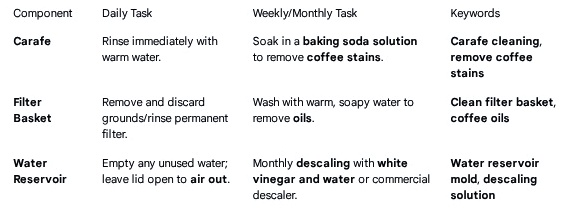
- Empty and Rinse Grounds Immediately: Used coffee grounds are warm and wet, making them the perfect environment for mold. Dispose of used coffee grounds promptly after brewing. For drip makers, discard the paper filter and rinse the filter basket. For espresso, knock out the coffee puck from the portafilter and rinse the basket.
- Rinse Removable Parts with Warm Water: Quickly wash the carafe or pot, filter basket, and any other detachable parts (like the water tank lid) with warm water. This removes loose coffee oils before they can solidify.
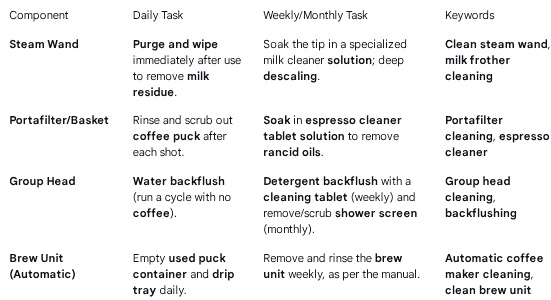
- Wipe and Purge the Steam Wand (Espresso Users): Milk residue is a major source of bacteria. Wipe down the steam wand with a clean, damp cloth immediately after frothing. Then, give it a quick “purge” of steam to clear any milk from the inside.
- Empty the Drip Tray and Knock Box: Both the drip tray (which collects excess water) and the knock box (where you discard espresso pucks) are constantly damp. Empty and rinse them daily to prevent mold and odors.
- Leave Lids and Doors Open to Dry: The most effective mold prevention tip is to encourage air circulation. Leave the water reservoir lid, the brew head door, and the carafe lid open after use to allow the machine’s interior to air out and dry thoroughly. This simple act eliminates the stagnant moisture mold needs to thrive.
Quick Tips for Specific Equipment
Different machines require slightly different cleaning tips.
- Drip Makers: For a glass carafe, rinse immediately. If you have a thermal carafe, make sure to wash the interior thoroughly, as coffee oils can coat the metal.
- Espresso Machines: After pulling a shot, run a water-only cycle through the group head while the portafilter is out (a “water backflush”). This flushes out loose grounds and oils from the screen.
- Moka Pots and Pour-Overs: For Moka pots, rinse all components with just hot water, avoiding soap, which can leave a residue that affects flavor. For pour-over cones (like V60 or Chemex), a simple, thorough rinse immediately after removing the filter is usually enough.
Weekly Deep Cleaning:
While daily cleaning tackles fresh residue, a weekly cleaning routine is necessary to remove the more stubborn coffee oils and early-stage biofilm that build up over time. This keeps your coffee equipment running smoothly and tasting great.
Deep Cleaning the Water Reservoir
The water reservoir is one of the most common spots for mold to grow. It’s critical to clean it regularly, even if you only use filtered water.
- Remove and Wash: Take out the water reservoir and wash it with warm, soapy water. Use a soft sponge or bottle brush to reach all corners.
- Vinegar Rinse: For an added sanitizing boost, you can fill the reservoir with a solution of equal parts white vinegar and water and let it sit for 30 minutes. Rinse thoroughly afterward to ensure no vinegar smell lingers.
- Use Filtered Water: Filtered water significantly reduces the mineral content, which not only prevents limescale buildup but also limits the impurities that can feed mold growth.
Portafilter and Basket Soaking
Espresso portafilters and filter baskets accumulate dark, greasy coffee oils that become rancid quickly.
- Soaking Solution: Once a week, soak your portafilter (but keep the handle out of the water to protect the plastic or wood) and filter basket in a solution of warm water mixed with a specialized espresso cleaner tablet or powder.
- Scrubbing: After soaking for 30 minutes, use a small cleaning brush or toothbrush to gently scrub away any lingering stale residue from the screen and edges. Rinse until the water runs clear and no soap or chemical smell remains.
Grinder Maintenance:
Even your coffee grinder needs attention. The burrs and chute can get coated with oils from the beans, which can go rancid and make your fresh beans taste old.
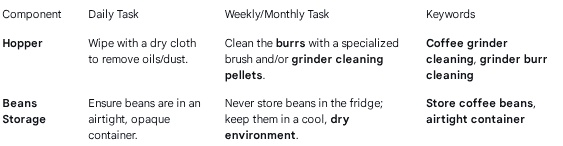
- Brush the Burrs: Unplug the grinder, disassemble the hopper and burrs according to the manufacturer’s instructions. Use a stiff, dry cleaning brush kit to clear out stuck grounds and fine powder.
- Grinder Cleaning Pellets: Run a small amount of commercially available grinder cleaning pellets (often made of food-safe grains) through the grinder. These pellets absorb the coffee oils and help scrub the burrs without leaving a chemical residue.
Monthly Deep Descaling:
Descaling is a deep cleaning process that uses an acidic solution to dissolve and flush out limescale buildup (calcium and magnesium deposits) from the machine’s boiler, heating elements, and internal tubing. This step is critical not just for a clean coffee maker, but for machine health and longevity.
Why Descaling is Vital
Scale buildup is a silent killer of coffee machines. It insulates the heating element, forcing the machine to work harder and increasing energy consumption. More importantly, it slows the brewing process and prevents water from reaching the optimal brewing temperature, resulting in an under-extracted, weak, or bitter taste.
The Descaling Process
The frequency of descaling depends on your water hardness, but a monthly deep clean is a good target for most users, especially if you don’t use a water filter.
- Prepare the Solution: Use either a manufacturer-recommended descaling solution (highly recommended for high-end espresso machines and complex automatic brewers) or a homemade white vinegar and water mix (typically equal parts for basic drip brewers).
- Run the Cycle: Fill the water reservoir with the descaling solution and run a full brew cycle without coffee grounds. For drip machines, run it halfway, pause for 30 minutes to allow the vinegar or solution to work its magic inside the machine, and then finish the cycle.
- Rinse Thoroughly: This is the most important step. Run at least two full cycles (ideally three) using only clean, fresh water to flush out the vinegar or chemical residue. A lingering vinegar smell or taste in your coffee means you need another rinse cycle.
- Replace Water Filters: If your machine has a charcoal water filter in the tank, replace it as recommended (usually every one to three months) to maintain the quality of your brewing water and reduce the rate of scale buildup.
Long-Term Mold Prevention and Stain Control Hacks
Beyond the regular cleaning routine, smart habits and a focus on moisture control are the keys to long-term performance and keeping your coffee equipment perpetually clean.
Water Quality: The Foundation of Cleanliness
The type of water you use directly impacts scale buildup and machine health.
- Use Filtered Water: This is one of the best strategies to prevent mold and limescale. Filtered water removes chlorine, which can react with coffee oils, and significantly reduces the mineral content that causes scale buildup.
- Avoid Distilled Water: While mineral-free, distilled or reverse osmosis water lacks the necessary minerals for proper coffee extraction and can sometimes damage a machine’s internal sensors over time. Aim for a Total Dissolved Solids (TDS) level of around 75–150 ppm for optimal flavor and machine health.
Controlling Moisture and Drying Thoroughly
Mold cannot grow without water. Drying thoroughly is a simple but extremely effective mold prevention hack.
- Air Dry Disassembled Parts: After washing, don’t reassemble any components until they are completely dry. Place the carafe, filter basket, and water reservoir on a drying rack. Storing them upside down allows for better air circulation.
- Wipe Down Exterior and Interior: Use a soft, clean, dry cloth to quickly wipe down the exterior and any accessible interior surfaces (like under the lid) after the machine has cooled.
- Storage Environment: Keep your coffee maker in a cool, dry environment, away from constant humidity and direct sunlight, which can degrade plastic and rubber seals.
Natural Cleaning Solutions for Stubborn Stains
For those inevitable, tough coffee stains and oily residue, you don’t always need harsh chemicals. Common household items are excellent natural cleaning solutions.
- Baking Soda Paste: A mixture of baking soda and water creates a gentle, non-abrasive paste. This is excellent for scrubbing coffee stains out of glass carafe and porous mugs. The mild abrasive action helps lift the stubborn tannins.
- Lemon Juice and Salt: The acidity of lemon juice works similarly to vinegar to dissolve stale residue, while the salt acts as a gentle scrubber. Mix a paste, rub it on the stain, and rinse well. This is a popular way to clean coffee mugs.
- Denture Cleaning Tablets: A surprisingly effective cleaning hack for glass or stainless steel carafes. Drop one or two denture tablets into a full carafe of warm water, let it fizz for a few hours or overnight, then rinse. The effervescent action helps lift set-in stains. You can find an excellent range of professional-grade cleaning brush kit and products to help with these tasks at our partner site, Cafeova.
Equipment-Specific Cleaning and Maintenance Tips
Different coffee equipment types face unique cleaning problems and require tailored cleaning strategies.
Drip Coffee Makers and Pour-Over Brewers
Drip machines are simple, but their enclosed nature makes the water pathways susceptible to mold and scale.
Espresso Machines (Semi-Automatic and Automatic)
Espresso machines are complex, with high pressure and milk systems that require diligent daily cleaning to prevent severe clogs and bacterial growth.
Coffee Grinders and Storage
Keeping your grinder clean prevents the build-up of stale, rancid coffee oils that can contaminate fresh beans
Common Cleaning Problems
Despite the best strategies to prevent mold and stains, you might occasionally run into a stubborn issue. Here’s how to tackle the most common coffee equipment problems.
My Coffee Tastes Weak or Bitter
A bitter taste in your coffee is often a direct result of a dirty machine.
- Problem: Rancid coffee oils coating internal surfaces or an extreme scale buildup affecting the brewing temperature.
- Solution: Perform an immediate and thorough descaling and detergent cleaning routine. Ensure you empty the water reservoir and dry thoroughly after use. A weekly detergent backflush for espresso machines is essential for removing deep-seated oils.
Slow Water Flow or Slow Brew Time
This issue is almost always a direct result of scale buildup.
- Problem: Limescale buildup blocking the internal tubes and heating elements, or a clogged filter basket.
- Solution: Increase the frequency of your descaling schedule. If you live in a hard-water area, consider using filtered water exclusively. For severe blockages, you might need a stronger commercial descaling solution.
Slime in the Water Reservoir
If you see a slimy film, you have a biofilm or mold problem.
- Problem: Stagnant water and infrequent cleaning routine.
- Solution: Immediately empty and clean the water reservoir with a strong white vinegar and water solution, scrubbing with a brush. Most importantly, make it a habit to empty the water reservoir after each use and leave the lid open to air out and dry thoroughly.
Disclaimer:
This article offers general guidance on coffee equipment cleaning and mold prevention. Always refer to your coffee machine manufacturer’s manual for specific cleaning solutions and instructions, especially concerning descaling and use of commercial products, to avoid damage or voiding your warranty. The use of natural cleaning solutions like white vinegar and water or baking soda should be done with caution, following the recommended rinsing steps to remove all residue