It’s early morning, the aroma of freshly roasted coffee beans fills your kitchen, but your specialty coffee brew tastes flat, bitter, or just off. Meet Sarah, a home barista who’s been chasing the perfect pour-over coffee for weeks, tweaking her grinder settings only to end up with cups that miss the mark. Sound familiar? Dialing in your coffee grinds is the secret to unlocking the vibrant flavors of single-origin beans, and in 2025, with home barista culture booming, getting it right is easier than ever. This guide will walk you through the art and science of grind size, helping you craft flawless brews every time, whether you’re using a French press, AeroPress, or espresso machine.
According to the National Coffee Association’s 2025 report, 68% of coffee drinkers now experiment with specialty coffee at home, yet many struggle with inconsistent brews due to improper grind settings. Dialing in your grinds means adjusting the grind size, dose, and brewing method to match your equipment and taste preferences. With the rise of sustainable coffee sourcing and precision grinders, home baristas like you can achieve café-quality results. Let’s dive into how to master this process, with practical tips, real-world examples, and Sarah’s journey to guide us.
Why Grind Size Matters for Specialty Brews
Grind size directly affects how water extracts flavor from coffee grounds. Too coarse, and your specialty coffee will taste weak or sour due to under-extraction. Too fine, and it can become bitter or muddy from over-extraction. Each brewing method pour-over coffee, espresso, or cold brew coffee demands a specific grind size to balance extraction time and flavor. Understanding this is the first step to flawless brews.
Sarah learned this the hard way. She started with a pre-ground bag of Ethiopian Yirgacheffe, using the same medium grind for both her French press and AeroPress. The French press was watery, while the AeroPress was overly bitter. By adjusting her grind size, she discovered how to highlight the beans’ floral notes, transforming her morning ritual.
The Science of Extraction
Extraction is the process where water pulls soluble compounds acids, sugars, and oils from coffee grounds. The Specialty Coffee Association (SCA) explains that ideal extraction yields 18-22% of the coffee’s mass into your cup, balancing sweetness, acidity, and body. Grind size controls the surface area exposed to water: finer grinds increase surface area for faster extraction, while coarser grinds slow it down. For single-origin beans, which often have delicate, nuanced flavors, precise grind adjustments are crucial to avoid masking their unique profiles.
Choosing the Right Grinder for Dialing In
Before tweaking grind settings, you need a reliable grinder. Blade grinders chop beans unevenly, leading to inconsistent brews, while burr grinders crush beans uniformly, giving you control over particle size. In 2025, home barista tools like the Baratza Encore ESP ($199) and Fellow Opus ($159) are top choices for their precision and affordability.
Take Blue Bottle Coffee, a leader in specialty coffee, which recommends burr grinders for home use to ensure consistency. Sarah upgraded from a blade grinder to a Baratza Virtuoso, which offers 40 grind settings. This allowed her to fine-tune her pour-over coffee from coarse sand to table salt texture, unlocking brighter flavors in her Colombian single-origin beans.
Burr Grinder Settings for Common Brew Methods
Here’s a quick guide to grind sizes for popular brewing methods, based on SCA standards and 2025 home barista trends:
- Espresso: Fine grind (like table salt). Fast extraction (20-30 seconds) requires small particles for bold, concentrated flavors.
- Pour-Over (e.g., V60, Chemex): Medium-fine to medium (like coarse sand). Balances clarity and body over 2-4 minutes.
- French Press: Coarse (like sea salt). Slow steeping (4 minutes) prevents muddiness.
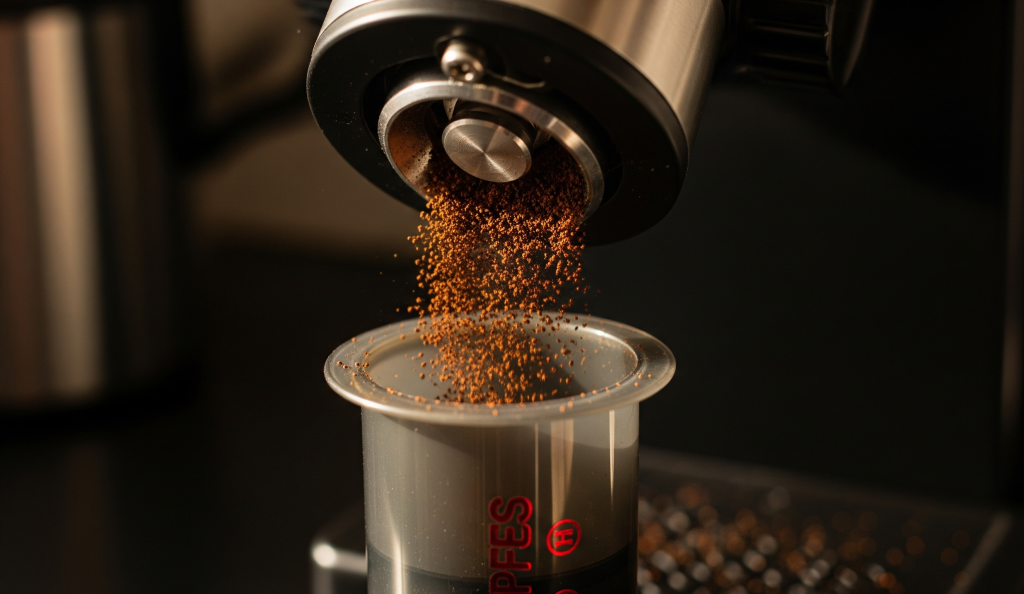
- AeroPress: Medium-fine (slightly finer than pour-over). Versatile for 1-2 minute brews.
- Cold Brew Coffee: Extra coarse (like cracked pepper). Long steeping (12-24 hours) needs larger particles to avoid bitterness.
Step-by-Step Guide to Dialing In Your Grinds
Dialing in grinds is an iterative process of testing and tweaking. Sarah’s journey to a perfect AeroPress brew shows how it’s done. Follow these steps to achieve flawless brews with any method.
Step 1: Start with a Baseline
Choose your brewing method and select a recommended grind size (see list above). Measure your coffee dose precisely use a scale for accuracy. A standard ratio is 1:16 (1 gram of coffee to 16 grams of water). For example, Sarah used 15g of coffee and 240g of water for her AeroPress.
Step 2: Brew and Taste
Brew your coffee, noting the time and taste. Is it sour (under-extracted), bitter (over-extracted), or balanced? Sarah’s first AeroPress brew was sour, indicating under-extraction, so she adjusted her grind finer.
Step 3: Adjust Grind Size
If the brew is sour, grind slightly finer to increase extraction. If it’s bitter, go coarser to reduce extraction. Make small adjustments 1-2 settings on a burr grinder and brew again. Sarah moved her Baratza Virtuoso from setting 15 to 13, which enhanced sweetness without bitterness.
Step 4: Fine-Tune Variables
Grind size isn’t the only factor. Adjust water temperature (195-205°F for most specialty coffee), brew time, or dose if needed. Sarah found that using 200°F water instead of 190°F brought out her Yirgacheffe’s citrus notes.
Step 5: Repeat and Record
Brew, taste, and tweak until you hit the sweet spot. Keep a journal to track settings, like Sarah did, noting grind size, brew time, and flavor profiles. This helps replicate flawless brews consistently.
Real-World Example: Stumptown Coffee’s Approach
Stumptown Coffee, a pioneer in sustainable coffee, emphasizes grind precision in their home brewing guides. Their Portland roastery trains baristas to dial in grinds daily, adjusting for humidity and bean freshness. For home baristas, Stumptown suggests starting with a medium-fine grind for pour-over and tasting for balance, just as Sarah did. Their 2025 blog highlights how single-origin beans like Rwanda Huye shine with precise grind settings, inspiring home experiments.
Sarah’s Breakthrough: A Fictional Barista’s Story
Sarah, our fictional home barista, felt defeated after weeks of lackluster brews. Her turning point came when she attended a local coffee workshop and learned about grind consistency. Armed with her new burr grinder, she spent a Saturday dialing in her AeroPress. She started with a medium-fine grind, brewed for 1.5 minutes, and tasted a sour cup. After three adjustments finer grind, hotter water, and a slightly longer brew she sipped a vibrant, blueberry-forward coffee that rivaled her favorite café. “It’s like I unlocked a secret code,” she grinned, sharing her recipe on Cafe Ova’s Instagram.
Common Mistakes and How to Avoid Them
- Inconsistent Grinding: Use a burr grinder to avoid uneven particles. Clean it regularly to prevent clogging, as advised by Fairtrade International’s coffee quality guides.
- Ignoring Bean Freshness: Single-origin beans lose flavor after 2-4 weeks. Store them in airtight containers and grind just before brewing.
- Overlooking Water Quality: Tap water can dull flavors. Use filtered water, as recommended by the SCA, for cleaner specialty coffee brews.
- Rushing the Process: Dialing in takes time. Brew multiple test cups, like Sarah, to find your perfect settings.
FAQs About Dialing In Grinds
Q: How long does it take to dial in a grind?
A: It varies, but expect 3-5 test brews per method. With practice, you’ll dial in faster, often in 1-2 tries.
Q: Can I dial in pre-ground coffee?
A: It’s harder since you can’t adjust grind size. For best results, grind fresh beans with a burr grinder.
Q: What if my grinder doesn’t have enough settings?
A: Focus on other variables like water temperature or brew time to compensate, but consider upgrading to a burr grinder with more settings.
Q: How do I know if my brew is balanced?
A: A balanced brew has sweetness, acidity, and body without sourness or bitterness. Taste for clarity and complexity, especially with single-origin beans.
Q: Does grind size matter for cold brew?
A: Yes! Use an extra-coarse grind for cold brew coffee to prevent bitterness during long steeping times.