Guide to Hosting an Unforgettable Home Coffee Tasting Event
Have you ever savored a cup of coffee and wondered about its complex story? The bright acidity of a light roast, the rich cocoa notes of a dark roast, or the surprising fruitiness of a bean from a distant continent. In an age where coffee has evolved from a simple morning ritual into a global culinary art form, the idea of a coffee tasting event at home is the ultimate way to deepen your appreciation.
It’s a chance to go beyond just drinking coffee and truly taste it, exploring a world of flavors and aromas you never knew existed. More than that, it’s a unique and engaging way to gather with friends and family, sharing a new sensory experience in a comfortable, personal setting.
This comprehensive guide will show you exactly how to host a coffee tasting at home that is not only informative but also fun and truly unforgettable. We’ll demystify the professional practice of “cupping” and transform it into an accessible, social activity. We will cover everything you need to know, from setting the scene and gathering the right equipment to a step-by-step walkthrough of the tasting process itself.
We will also provide expert tips on food pairings, creating the perfect ambiance, and sending your guests home with a memorable takeaway. Get ready to embark on a flavorful adventure that will change the way you think about coffee forever.
Part 1: The Foundation – Planning Your Coffee Tasting Event
A successful event begins with meticulous planning. Think of yourself not just as a host, but as a curator of a memorable experience. Getting the details right will set the stage for a smooth and enjoyable tasting.
The Guest List: Keeping It Intimate
For a coffee tasting, a smaller group works best. An ideal number is between four and eight people. This size allows for meaningful discussion and ensures everyone has enough space and materials to participate fully. An intimate setting encourages open dialogue and a shared sense of discovery. When sending out invitations, it is a good idea to mention the theme of the event and give a brief overview of what to expect.
Choosing a Theme: Your Tasting’s Narrative
A theme gives your tasting event a clear focus and helps guide your coffee selection. It makes the experience more cohesive and educational. Here are a few ideas that are popular in searches for coffee tasting party ideas:
- Geographic Exploration: Choose coffees from a specific region, such as East Africa (Ethiopia, Kenya, Rwanda) or Central America (Costa Rica, Guatemala, Panama). This theme highlights the impact of terroir and climate on flavor.
- Processing Methods: Compare coffees from the same origin but processed differently (e.g., washed, natural, honey). This is a fascinating way to learn about the post-harvest journey of the bean.
- Roast Levels: Taste the same bean roasted at different levels (light, medium, dark). This is a great starting point for beginners, as it clearly demonstrates how roasting affects flavor. The search for light vs dark roast flavor is a popular topic for a reason.
- Single Origin vs. Blend: Compare a few single-origin coffees with a carefully crafted blend. This highlights the art of coffee blending.
Once you’ve chosen your theme, select three to four different coffees to taste. This is the perfect number to provide variety without causing palate fatigue. Make sure your guests are aware of the theme; it adds an element of excitement and anticipation.
Setting the Scene: Ambiance and Comfort
Create a space that is clean, well-lit, and free of strong odors. Scents from scented candles, fresh flowers, or cooking can interfere with the tasting, as the sense of smell is crucial for evaluating coffee.
- The Tasting Table: Set up a clean, clutter-free table. It should be large enough to accommodate all the necessary equipment for each participant.
- Natural Light: If possible, choose a space with good natural light. It helps in evaluating the color and consistency of the coffee.
- Background Noise: Play some soft, ambient background music to create a relaxed and inviting atmosphere. Instrumental or low-key acoustic music works well.
Part 2: The Science and Art of Tasting – Understanding the Basics
You don’t need to be a professional barista to lead a tasting. The goal is to provide a framework for guests to explore and articulate their own sensory experiences. The formal term for professional coffee tasting is “cupping,” and we’ll borrow some of its core principles.
The Four Pillars of Coffee Evaluation
Professional coffee tasters use a standardized vocabulary to describe coffee. Introduce these concepts to your guests in a simple way. They are the foundation of any coffee tasting guide for beginners.
- Aroma: The smell of the coffee. This is a crucial step, as much of what we perceive as flavor is actually aroma. Start with the dry grounds, then smell the “bloom” (the wet grounds), and finally the brewed coffee. Common aromas include floral (jasmine, rose), fruity (berry, citrus), nutty (almond, walnut), or chocolatey.
- Flavor: The taste of the coffee on your tongue. Encourage guests to think beyond “good” or “bad.” Is it sweet, sour, bitter, or salty? What specific notes can they identify? Think of common food and drink flavors like caramel, green apple, grape, or cinnamon.
- Acidity: The pleasant tartness or brightness in the coffee, not to be confused with bitterness. Think of the acidity in a lemon or a green apple. High acidity can feel lively on the palate, while low acidity is often described as smooth or mellow. This is a key differentiator when comparing different beans and a topic frequently seen in coffee tasting notes.
- Body (Mouthfeel): The weight or texture of the coffee on your tongue. Is it thin and watery, or rich and syrupy? Terms like “creamy,” “heavy,” “silky,” or “light” are used to describe body.
The Cupping Protocol: A Simplified Approach
The official cupping protocol involves a specific process, but you can simplify it for a home event. The key is to standardize the brewing and tasting to ensure a fair comparison between the coffees. This is the most important part of how to host a coffee tasting.
- Standardize Everything: Use the same water, the same brewing time, the same grind size, and the same ratio of coffee to water for each coffee. This consistency ensures you are only tasting the differences between the beans themselves, not the brewing variables.
- Encourage Slurping: Explain to your guests that slurping is not just rude; it’s essential for a proper tasting. Slurping aerates the coffee, spreading it across the entire palate and releasing aromatic compounds that enhance the flavor.
Part 3: The Equipment – Your Barista Toolkit
You don’t need expensive, professional gear to host a great tasting. Many of these items you might already have in your kitchen. This is your essential coffee tasting checklist.
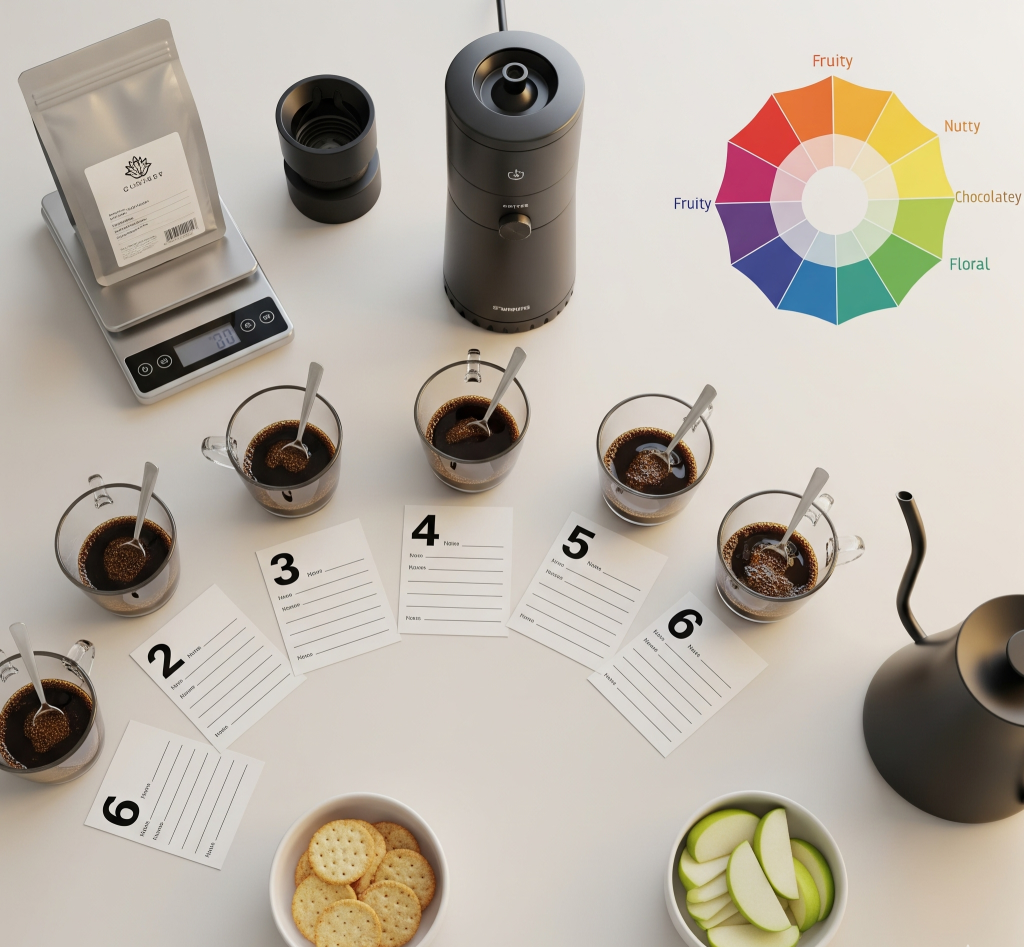
- The Grinder: A burr grinder is a non-negotiable for a good tasting. It provides a consistent grind size, which is critical for even extraction.
- The Kettle: A gooseneck kettle offers precise control over the water flow, which is helpful for both cupping and pour-over methods. A standard electric kettle is also perfectly fine.
- The Scale: A digital kitchen scale that measures in grams is essential. Measuring by weight, not volume, is the only way to ensure consistency between your brews.
The Brewing Device: While professional cupping uses a simple bowl, you can use a consistent brewing method like a French press or a pour-over cone for each coffee. Just make sure to use the exact same device for all of them. -
Tasting Glasses or Bowls: Small, clear glasses or cups are perfect for a tasting. Using identical containers for each coffee is a must.
- Tasting Spoons: Small spoons are used to scoop coffee from the bowls for tasting.
- Notepads and Pens: Provide each guest with a small notepad and a pen to write down their observations and rating. This turns the tasting into an interactive and educational experience.
- Spittoons: Provide a few cups or bowls for guests to use as “spittoons.” This prevents palate fatigue and over-caffeination.
- Palate Cleanser: Provide glasses of water and some unsalted crackers or simple bread to cleanse the palate between each tasting.
Part 4: The Main Event – A Step-by-Step Guide to the Tasting
With the planning complete and the equipment ready, it’s time for the tasting itself. Walk your guests through these steps, explaining the purpose of each one.
- Setting Up: Label each coffee with a number or letter to keep them anonymous. This prevents any preconceived notions about a particular brand or origin. Have the ground coffee in separate bowls ready for the first step.
- Step 1: The Dry Aroma: Instruct your guests to lean in and smell the dry coffee grounds in each bowl. Ask them to write down what they smell. Is it sweet, nutty, or spicy?
- Step 2: The Brewing and Bloom: Use your kettle to pour hot water (around 90-95°C or 195-205°F) over the grounds in each bowl or French press. Fill each container evenly, and let the coffee bloom for 30 seconds. This is a great time to discuss the bloom and the science behind it.
- Step 3: The Wet Aroma: After the bloom, instruct your guests to smell the wet grounds. The aroma will have changed and intensified. Encourage them to compare the wet aroma to the dry aroma notes they wrote down.
- Step 4: Breaking the Crust: After the coffee has brewed for a few minutes, a crust of grounds will form on the surface. Use a spoon to gently “break” the crust by pushing it down. This releases a powerful burst of aroma. Ask your guests to smell this new aroma and note it down.
- Step 5: The Tasting: Using their tasting spoon, instruct your guests to scoop a spoonful of coffee from each bowl and slurp it loudly and forcefully. This is the moment to taste the coffee’s flavor, acidity, and body. Ask them to write down their observations.
- Step 6: Discussion and Ranking: Once everyone has tasted all the coffees, it’s time for a group discussion. Everyone can share their notes and what they liked or disliked about each coffee. Finally, reveal which coffee is which and have everyone vote on their favorite. This is a great way to discover new preferences and share a moment of shared experience. The search for coffee flavor wheel is a great visual aid for this part.
Part 5: Elevating the Experience – Food Pairings and Ambiance
A coffee tasting can be even more memorable with the right pairings and thoughtful details.
The Art of Food Pairing
Pairing coffee with food can highlight flavors and create a truly harmonious experience. Here are a few coffee and food pairing ideas:
- For Light Roasts (Fruity, Floral): Pair with baked goods that have a lighter flavor profile, such as lemon poppy seed muffins, shortbread cookies, or fruit tarts. These pairings won’t overpower the delicate notes of the coffee.
- For Medium Roasts (Balanced, Nutty): A versatile roast that pairs well with a wide range of foods. Try chocolate chip cookies, biscotti, or even a simple cheese board with mild cheeses.
- For Dark Roasts (Bold, Roasty): This calls for richer pairings. Chocolate is a classic. Try a dark chocolate brownie, a molten lava cake, or a tiramisu. The bold flavors will stand up to the intensity of the coffee.
Creating the Perfect Ambiance
- Lighting and Décor: Use warm lighting and simple decorations. A small vase of neutral-colored flowers or some tasteful, minimalist candles can create an elegant feel without being distracting.
- Music: Create a custom playlist. Think about genres like lo-fi, jazz, or classical music to set a relaxing tone. This is a key element in hosting a great coffee tasting event.
- Coffee Bar Signs: A small chalkboard or a stylish sign can be used to display the “menu” of the day, including the origin and processing method of each coffee.
 Part 6: Beyond the Tasting – Activities and Takeaways
The fun doesn’t have to end when the tasting is over. A few extra touches can make your event truly unforgettable.
- Brew-Off Competition: After the tasting, challenge your guests to a “brew-off” using their favorite coffee from the tasting. Provide various brewing devices and see who can make the best cup.
- Coffee Trivia: Create a list of fun coffee trivia questions and offer a small prize to the winner. This keeps the energy high and the conversation flowing. The search for coffee facts and trivia is a great place to start your research for this.
- DIY Coffee Scrub Station: If you’re feeling crafty, set up a simple station with used coffee grounds, sugar, and coconut oil for guests to create their own exfoliating body scrubs.
- Personalized Goodie Bags: Send your guests home with a small bag of their favorite beans from the tasting, a small bag of a unique blend, or a custom-designed coffee tasting notes card. It’s a thoughtful way to thank them for coming and to remind them of the fun they had.
The Final Drop: Savoring the Moment
Hosting a home coffee tasting event is more than just an activity; it’s a journey of discovery and a celebration of a beloved beverage. By focusing on a simple structure, providing a fun and educational environment, and adding personal touches, you can transform a simple get-together into an unforgettable experience.
It’s a chance to connect with friends over a shared passion, to learn something new, and to appreciate the incredible complexity and artistry that goes into every cup of coffee. So, set your date, choose your beans, and get ready to lead your guests on a delicious and insightful sensory adventure. The world of coffee awaits, one unforgettable sip at a time.