Introduction
The aroma of freshly brewed coffee wafting through the air is a symphony for the senses, a daily ritual that elevates ordinary moments. For the home barista, the pursuit of the perfect cup is an ongoing journey, a blend of science, art, and personal preference. As you delve deeper into the world of specialty coffee, you’ll inevitably encounter two distinct paths: single-origin coffees and artisanal coffee blends.
But which is the optimal choice for you? Is it the raw, unadulterated expression of a single place, or the harmonious complexity crafted by a master roaster? This isn’t just a matter of taste; it’s about understanding the nuances of coffee bean characteristics, roast levels, brewing methods, and even coffee sustainability. This comprehensive guide will explore the fascinating differences between single-origin and blended coffees, arming you with the knowledge to make informed decisions and elevate your home brewing to an art form. Get ready to unlock new dimensions of flavor and discover your true coffee preference.
1. Demystifying the Beans: What Exactly Are We Talking About?
Before we dive into the great debate, let’s establish a clear understanding of what defines single-origin coffee and artisanal coffee blends. These terms are frequently used, but their precise meanings are crucial for any discerning home barista.
1.1 The Essence of Single-Origin Coffee: A Taste of Place
Imagine a glass of fine wine that hails from a specific vineyard, expressing the unique characteristics of that soil, climate, and grape variety. Single-origin coffee is the coffee equivalent. It refers to coffee beans that are sourced from a single, identifiable geographic location. This specificity can vary:
- Single Country: The broadest definition, meaning all beans come from one country (e.g., Ethiopian coffee, Colombian coffee).
- Single Region: More specific, from a particular coffee-growing region within a country (e.g., Yirgacheffe from Ethiopia, Huila from Colombia).
- Single Farm/Estate: Even more precise, with beans originating from a specific farm or estate.
- Micro-lot: The pinnacle of specificity, representing beans from a small, distinct plot within a farm, often picked and processed with exceptional care.
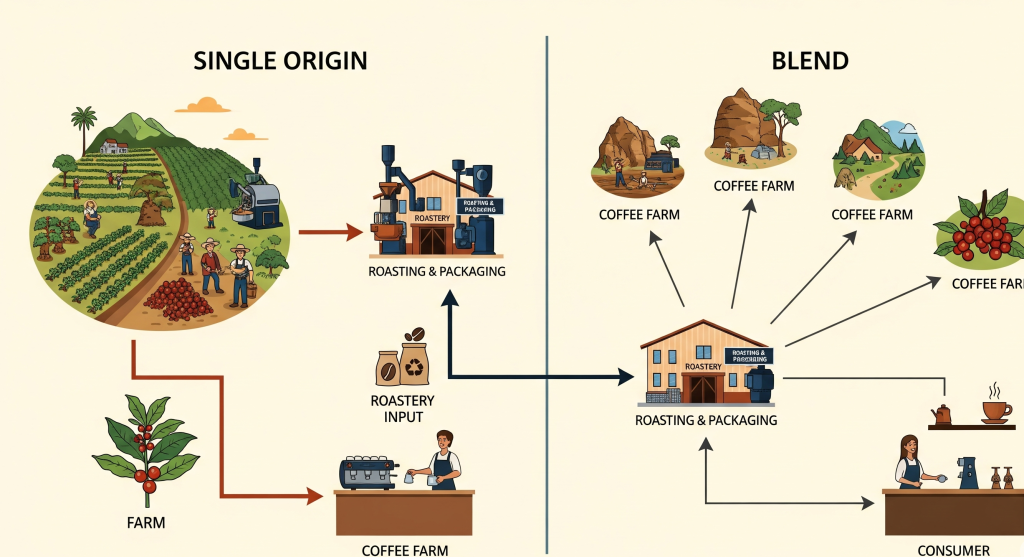
The defining characteristic of single-origin coffee is its traceability. You know exactly where your coffee comes from, often down to the producer. This allows the unique terroir of that specific location – the combination of soil, climate, altitude, and even processing methods to shine through, offering a singular and often vibrant flavor profile.
 1.2 The Art of Artisanal Coffee Blends: Harmony in a Cup
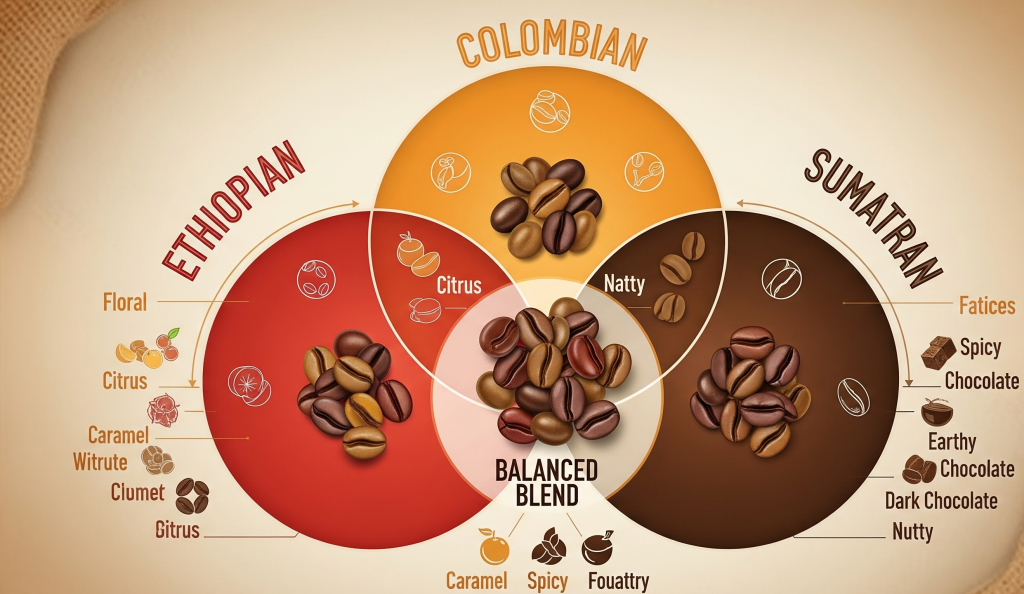
In contrast, artisanal coffee blends are a carefully crafted combination of coffee beans from two or more different origins. Think of it like a master chef combining various ingredients to create a dish with a perfectly balanced and complex flavor that no single ingredient could achieve on its own.
Roasters create blends with specific goals in mind:
- Consistency: To maintain a consistent flavor profile year-round, despite seasonal variations in individual crops. If one origin’s harvest isn’t up to par, the roaster can adjust the blend’s components.
- Balance: To achieve a well-rounded cup, complementing the strengths of one bean with another. For example, a bright, acidic African coffee might be balanced with a nutty, full-bodied South American bean.
- Complexity: To create a more intricate and layered flavor experience than a single bean could offer.
- Targeted Use: Blends are often designed for specific brewing methods, such as an espresso blend optimized for rich crema and balance with milk, or a filter blend tailored for clarity and sweetness.
Modern specialty coffee blends are far from the old commercial practice of using lower-quality beans to hide imperfections. Today’s artisanal blends are a testament to a roaster’s skill, meticulously selecting high-quality beans to achieve a desired, often sophisticated, flavor outcome.
 2. The Allure of Single-Origin Coffee: Purity and Exploration
For many home baristas, the appeal of single-origin coffee lies in its unadulterated expression of place. It’s an opportunity to truly taste the terroir and understand the unique characteristics that different regions, varieties, and processing methods impart.
2.1 The Unique Flavor Profiles and Tasting Notes
The primary draw of single-origin coffee is the ability to explore distinct and often vibrant tasting notes. Factors like:
- Altitude: Higher altitudes typically lead to denser beans and more complex, acidic flavors (e.g., bright, floral notes in Ethiopian Yirgacheffe).
- Climate: Temperature, rainfall, and sunlight directly influence bean development and sugar content.
- Soil Composition: The minerals and nutrients in the soil directly affect the bean’s chemistry.
- Varietal (Species/Subspecies): Different coffee plant varieties (e.g., Bourbon, Typica, Geisha) have inherent flavor characteristics.
- Processing Method: How the coffee cherry is processed after harvest significantly impacts flavor:
- Washed (Wet) Process: Beans are depulped and fermented, then washed clean. This typically results in cleaner, brighter, and more acidic coffees with distinct floral or citrus notes. Examples: Many Central American coffees.
- Natural (Dry) Process: The entire coffee cherry is dried with the bean inside, allowing the fruit’s sugars to infuse the bean. This often leads to fruity, sweet, and full-bodied coffees with notes of berries, tropical fruits, or chocolate. Examples: Many Ethiopian and Brazilian coffees.
- Honey (Pulped Natural) Process: A hybrid where the skin is removed, but some of the sticky fruit mucilage is left on to dry. This yields a balance of fruitiness and cleanliness, often with balanced acidity and medium body, and notes of caramel or honey. Examples: Common in Costa Rica and Brazil.
By delving into single-origin coffees, you can experience the spectrum: from the floral and citrusy notes of an Ethiopian Sidamo to the chocolatey and nutty profiles of a Brazilian Cerrado, or the bright, wine-like acidity of a Kenyan AA. This exploration broadens your coffee palate and deepens your appreciation for the craft of coffee farming and roasting.
 2.2 Traceability, Ethics, and Connection
One of the most significant benefits of single-origin coffee is its traceability. When you buy a single-origin, you often get detailed information about the farm, region, altitude, and even the farmer. This transparency fosters a stronger connection between the consumer and the producer.
- Supporting Farmers: Buying single-origin often means supporting specific farms or co-operatives, helping them gain recognition and better prices for their quality crops. This aligns with ethical sourcing coffee practices.
- Understanding the Supply Chain: For the discerning home barista, understanding the journey of the bean from farm to cup adds a layer of appreciation. It highlights the efforts of those involved in cultivating and processing high-quality coffee.
- Seasonal Availability: Single-origin coffees are often seasonal, reflecting harvest times. This means you get to experience beans at their peak freshness and enjoy a rotating selection throughout the year.
While the unique flavors and traceability are compelling, single-origin coffees can also present challenges. Their distinctiveness might not appeal to everyone, and their often brighter acidity or unusual notes might require a more adventurous palate. They can also be less forgiving in brewing, as their specific characteristics are more pronounced.
3. The Reliability and Versatility of Artisanal Coffee Blends: Crafted Consistency
If single-origins are like solo artists, artisanal coffee blends are like well-rehearsed orchestras, where each instrument plays its part to create a harmonious and consistent masterpiece. Blends are designed to offer a balanced and enjoyable experience, often tailored for specific uses.
3.1 Achieving Consistency and Balance
The primary goal of a coffee blend is to deliver a consistent flavor profile day after day, year after year. This is particularly vital for cafes and commercial operations, but it’s equally appealing to home baristas who crave a reliable and predictable cup.
- Year-Round Flavor: By combining beans from different regions with varying harvest cycles, roasters can ensure that a blend’s signature taste remains stable, even as individual components change due to seasonal availability.
- Balanced Cup: Roasters expertly select beans that complement each other, mitigating any extreme characteristics. For instance, a very bright, high-acidity bean can be mellowed by a rich, low-acidity bean, creating a more universally appealing and well-rounded coffee. This means a smoother, less challenging cup for daily enjoyment.
- Enhanced Complexity: While single-origins showcase individual characteristics, blends can create a new, intricate flavor profile that transcends its components. A skilled roaster can layer flavors – perhaps a chocolatey base from Brazil, with a hint of berry brightness from Ethiopia, and a nutty finish from Colombia – to achieve a complex and satisfying taste that evolves on the palate.
 3.2 Optimized for Brewing Methods: Best Blends for Espresso and More
One of the most significant advantages of blends, especially for home baristas venturing into different brewing methods, is their optimization for specific uses.
- Espresso Blends: Many blends are specifically crafted as espresso beans. The goal is typically to create a shot with good body, rich crema, and a balanced flavor that can stand up to milk in lattes and cappuccinos. Single-origin espressos can be incredibly vibrant but might be too acidic or bright for some palates, especially with milk. Blends often feature darker roasts or beans that develop rich chocolatey and nutty notes, which are traditional and highly sought-after in espresso.
- Filter Blends: While single-origins often shine in filter methods like pour-over or French Press, blends can offer a more approachable and consistent daily brew. They might combine beans that ensure a consistently sweet, clean, and balanced cup, regardless of slight variations in brewing technique.
- Versatility: A well-designed blend can be surprisingly versatile, performing well across a range of brewing methods, offering a reliable option when you’re experimenting with different equipment.
While blends offer consistency and versatility, the trade-off is often a lack of extreme distinctiveness. They are designed to be harmonious, which sometimes means sacrificing the striking, singular characteristics that define a great single-origin. Traceability, while still important, might be less granular than with a micro-lot single origin.
4. The Discerning Home Barista’s Dilemma: Making Your Optimal Choice
So, how does a discerning home barista navigate this delicious dilemma? The “optimal choice” isn’t universal; it’s deeply personal and depends on your goals, preferences, and willingness to experiment.
4.1 What’s Your Coffee Personality?
- The Adventurer/Explorer: If you love trying new things, exploring diverse coffee tasting notes, and appreciate the nuances of coffee terroir, then single-origin coffees are likely your playground. You’ll enjoy rotating through different origins, experiencing the unique characteristics of each harvest. You’re happy with a more “pure” expression of the bean, even if it means a less predictable cup.
- The Consistent Connoisseur: If you value reliability, a perfectly balanced cup every morning, and a familiar, comforting flavor profile, then artisanal coffee blends will probably be your go-to. You appreciate the roaster’s skill in crafting a harmonious experience that always delivers. You might gravitate towards blends optimized for your preferred brewing method, especially if you enjoy milk-based drinks.
- The Everyday Drinker: For daily consumption, especially if you have a routine, a consistent blend can be a lifesaver. You know what you’re getting, and it minimizes the variables in your morning ritual.
4.2 Consider Your Brewing Method
Your coffee brewing method plays a significant role in which type of coffee will shine.
- Pour Over / Drip Coffee: Both single-origin coffees and blends can excel here. Single-origins, especially lighter roasts with bright acidity and floral notes, often shine in pour-overs, allowing their delicate flavors to come through cleanly. However, a well-crafted filter blend can offer a consistently enjoyable and balanced cup for daily drip coffee.
- Espresso Machine: This is where coffee blends often truly shine. The high pressure and short extraction time of espresso can amplify the nuances (and sometimes the less desirable traits) of a single-origin. Blends are meticulously designed to handle the espresso process, offering balanced acidity, rich body, and excellent crema, making them ideal for espresso shots and milk-based beverages. While single-origin espresso can be incredible, it’s often more challenging to dial in and might not appeal to everyone’s palate due to its intense, unmasked flavor.
- French Press: The full immersion of a French Press can bring out the full body and richness of both single-origins and blends. Single-origins can be spectacular, showcasing their unique depth. Blends will offer a consistently robust and comforting cup.
- Cold Brew: Both can work for cold brew. Natural-processed single origins can yield incredibly fruity cold brews, while blends often create a smoother, more chocolatey, and less acidic concentrate, perfect for a mellow everyday drink.
 4.3 Roast Level and Flavor Development
The roast level is another critical factor influencing flavor and how a coffee performs.
- Light Roasts: These retain more of the bean’s inherent origin characteristics and acidity. They often feature bright, fruity, or floral notes. Many single-origin coffees are roasted lightly to preserve these delicate flavors. Best for pour-over, Aeropress, or any method that highlights clarity.
- Medium Roasts: A balance between origin characteristics and roast development. They develop more body and sweetness, with notes of caramel, chocolate, or nuts. Many versatile blends and some single-origins fall into this category. Good for drip, French Press, and approachable espresso.
- Dark Roasts: Characterized by bold, robust flavors, lower acidity, and notes of dark chocolate, smoke, or roastiness. The origin characteristics are often subdued by the roast. While some single-origins are dark roasted, most dark roast coffees are blends designed for a powerful, consistent experience, especially popular for traditional espresso and drip coffee.
Understanding how roast levels and coffee flavor interact is key to making your choice. If you prefer bright, complex flavors, lean towards lighter roasted single-origins. If you like bold, rich, and comforting flavors, dark-roasted blends might be more your speed.
5. Beyond Flavor: Sustainability and Ethical Considerations
For the modern home barista, the journey of coffee extends beyond the cup. Coffee sustainability and ethical sourcing are increasingly important considerations when choosing between single-origins and blends.
5.1 Traceability and Impact
- Single-Origin Advantage: Single-origin coffee often provides superior traceability, allowing consumers to directly support specific farms and their sustainable practices. This direct connection can ensure that farmers receive fair compensation and that environmentally friendly methods are employed. Certifications like Fair Trade, Rainforest Alliance, or specific farm transparency reports are more readily available and verifiable for single origins.
- Blends and Sustainability: While blends might seem less transparent, many reputable roasters apply the same ethical sourcing coffee standards to the components of their blends. They still purchase high-quality, sustainably grown beans from known suppliers. The benefit of blends in this regard can be market stability for smaller producers. By incorporating beans that might not stand alone as single-origins (but are still high quality), blends create a broader market for diverse crops, reducing reliance on a single, popular origin. This can contribute to sustainable coffee practices by ensuring a more stable income for a wider range of farmers.
The key here is to choose trusted roasters who are transparent about their sourcing practices, whether they specialize in single-origins or blends. Look for information on their websites, certifications on the bags, and their stated commitment to farmer relationships and environmental stewardship.
 6. Cultivating Your Palate: The Journey of a Discerning Home Barista
Ultimately, the journey to finding your optimal coffee choice is about developing your coffee palate and understanding what you truly enjoy.
6.1 The Power of Coffee Cupping at Home
Coffee cupping, a standardized method used by professionals to evaluate coffee, is an excellent way for home baristas to deepen their understanding of flavor.
- How to Cupping: Grind small amounts of different coffees (single-origins and blends) to a medium-coarse consistency. Place grounds in separate cups. Smell the dry grounds. Pour hot water (around 200°F/93°C) over them. Let steep for 4 minutes. “Break the crust” by pushing grounds to the bottom with a spoon, smelling the aromas released. Skim off any floating grounds. After 10-15 minutes, when the coffee has cooled, slurp the coffee from a spoon, allowing it to coat your palate and aerate.
- Benefits: Cupping allows you to isolate and identify specific coffee tasting notes, compare coffees side-by-side, and understand how roast levels and processing methods impact flavor. It’s a fantastic way to train your senses.
6.2 Experiment, Document, and Trust Your Taste
- Keep a Coffee Journal: Note down the coffee’s origin/blend, roast date, brewing method, water temperature, grind setting, and most importantly, your tasting notes. What aromas did you detect (floral, fruity, nutty, chocolatey)? What was the acidity like (bright, mellow)? What about the body (light, medium, full)? Did you notice any aftertaste?
- Blind Taste Tests: Periodically conduct blind taste tests with a friend. Brew a single-origin and a blend (or two different single-origins/blends) without knowing which is which. This helps eliminate bias and truly focus on the flavor.
- Don’t Be Afraid to Experiment: The beauty of being a home barista is the freedom to play. Adjust your grind size, vary your water temperature, change your brew time. See how these small adjustments transform your cup.
- Visit Local Roasters: Engage with your local specialty coffee roasters. They are passionate experts who can offer guidance, introduce you to new beans, and help you understand the nuances of their roasts and blends. Ask them about their ethical sourcing coffee practices.
- It’s All About Preference: There’s no single “best” coffee. The optimal choice is the one that consistently brings you joy and satisfaction. Don’t feel pressured to prefer single-origins if you consistently find more pleasure in a well-crafted blend, or vice versa.
Your Journey, Your Coffee
The world of coffee is vast and endlessly fascinating, offering a delightful playground for any discerning home barista. The debate between single-origin coffees and artisanal coffee blends isn’t about one being inherently “better” than the other. Instead, it’s about understanding their unique strengths and aligning them with your personal preferences and brewing goals.
Single-origins invite you to embark on a geographical and sensory adventure, offering a pure, unadulterated taste of a specific place, showcasing the distinct impacts of terroir and processing methods. They are perfect for those who crave exploration, appreciate traceability, and enjoy the vibrant, often challenging, complexities of individual beans.
Artisanal blends, on the other hand, are a testament to the roaster’s craft, meticulously engineered to provide consistency, balance, and layered complexity. They are the workhorses of the coffee world, offering reliable deliciousness for daily enjoyment, often perfectly optimized for specific brewing methods like espresso.
Ultimately, the optimal choice for you is dynamic. You might find yourself gravitating towards single-origins for your morning pour-over, reveling in their unique character, while relying on a trusted blend for your afternoon espresso. Or perhaps you’ll become a blend loyalist, appreciating the consistent comfort and expertly crafted harmony they provide.